How Much Chlorine Add to Your Pool [Tablets or Liquid]
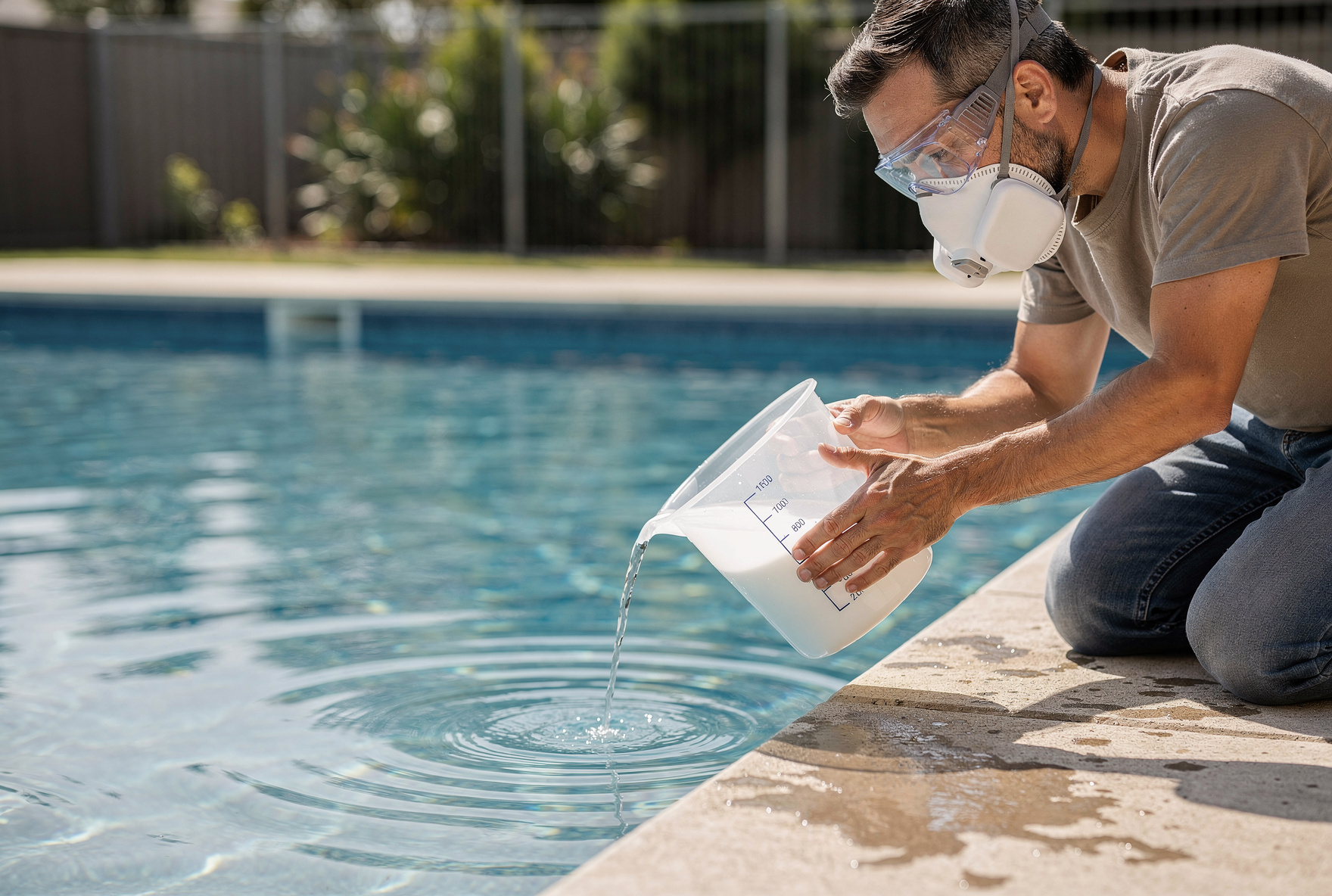
Here is are the basics of how much chlorine to add to your pool:
- 1 chlorine tablet or half a gallon of liquid chlorine for every 5,000 gallons of water
- 1 chlorine tablet or 1.9 litres of liquid chlorine for every 19,000 litres of water
It's super easy to keep things balanced when you have the right numbers! Maintaining the right chlorine levels keeps your water safe and sparkling while preventing algae, cloudy water, and other headaches.
Why Chlorine Matters for Your Pool
Chlorine keeps your pool clean, clear, and safe. It kills germs and bacteria that love warm water. That means no funky odors, no weird film, and no green slime to ruin your day.
Without enough chlorine:
- Bacteria and algae take over fast.
- Water can turn green or cloudy overnight.
- Swimmers risk skin irritation or getting sick.
Chlorine also breaks down all the sweat, oils, lotions, and sunscreen swimmers bring in. This isn’t just about germs, it’s about keeping water clean and safe.
On the flip side, you really don't want to overdo it. High chlorine levels make things uncomfortable for everyone in the pool.
With too much chlorine:
- Your cute swimsuits fade and degrade much faster than they should.
- It strips moisture and leaves you with dry, itchy skin.
- Your hair might feel like straw or even turn a weird color.
- The water stings your eyes and turns them red.
Your sweet spot is free chlorine between 1-3 ppm. That’s the magic range for a safe, comfy swim.
How to Choose: Chlorine Tablets vs. Liquid
You’ve got two solid choices for sanitizing your pool:
- Tablets: Slow-dissolving and super convenient for routine care. Add 1 tablet per 5,000 gallons each week. For a 20,000-gallon pool, that’s 4 tablets. Each 3-inch tablet gives about 5 ppm to 10,000 gallons. Tablets last longer in storage and are easy to drop in dispensers or chlorinators. They cost a bit more, so expect to pay $80-$130 for a 50-pound bucket, but they stretch pretty far.
- Liquid chlorine: This works fast and is great when you need instant results. Use half a gallon per 5,000 gallons a week. That’s 2 gallons for a 20,000-gallon pool. For a strong shock, add 1 gallon of 12.5% liquid chlorine per 10,000 gallons. It’s cheaper at $3.50-$6.00 a gallon but you’ll need to add it more often. Liquid’s perfect when you want to bump up chlorine before a big splash party or after heavy use.
Most pool owners blend both options. Use tablets for regular upkeep and bring out the liquid when you need a quick boost or an after-party shock.
How to Measure Your Pool’s Volume
You can't treat your pool right if you don’t know its size. The math’s actually a breeze:
Here is the easy math to figure out your pool's volume in gallons:
- Rectangular or square: Multiply length x width x average depth x 7.5 to get gallons. Let’s say you have a 20 x 10 pool that’s 5 feet deep. That equals 7,500 gallons.
- Round or oval: Calculate length x width x average depth x 5.9 for gallons. If you're rocking a 15-foot round pool that’s 4 feet deep, calculate 15 x 15 x 4 x 5.9 for 5,310 gallons.
If you measure in metres, use these formulas to find your volume in litres:
- Rectangular or square: Multiply length x width x average depth x 1,000 for litres. For a 6 x 3 meter pool that's 1.5 meters deep, calculate 6 x 3 x 1.5 x 1,000 for 27,000 litres.
- Round or oval: Multiply length x width x average depth x 785 to get liters. A round pool with a 4.5-meter diameter and 1.2-meter depth comes out to roughly 19,075 litres.
If depth varies, average it out by measuring the shallow and deep ends, then divide by two. Or check your pool’s paperwork. Many builders include volume info, so you can skip the math.
How Do You Know When You Need More Chlorine?
Your pool’s not on an island, so you’ll want to tweak chlorine based on what’s going on. Here’s what to watch for:
- Sunlight: Sun, especially UV rays, breaks down chlorine fast. Outdoor pools need more chlorine than indoor ones. Hot, sunny afternoons can slice chlorine levels in half by the end of the day.
- Temperature: The warmer it gets, the quicker chlorine disappears. Pools need more chlorine in July heat than in early spring.
- Swimmers: More people means more stuff in the water like sweat, sunscreen, and body oils all eat up chlorine. Hosting a pool party? Add extra chlorine after.
- Rain and wind: Rain dilutes your chemicals and brings in pollen or dirt. Wind blows debris in too. Always test after storms or windy days and add more chlorine if levels drop.
When it’s busy and hot, test your water more often. You might need to up chlorine to 2-3 times weekly in peak summer.
Your Chlorine Maintenance Schedule
Consistency keeps your pool clean and costs down. Here’s a routine that will help you stay on top of chlorine levels:
- Test chlorine 2-3 times a week with test strips or a kit.
- Keep free chlorine between 1-3 ppm for happy skin without algae or other gross stuff.
- Add tablets weekly for slow and steady care.
- Add liquid chlorine 1-2 times a week if you’re having lots of swimmers or heat waves.
- Shock your pool with a bigger chlorine dose every 1-2 weeks or after heavy use or storms.
- In cooler months when the pool’s quiet, testing every two weeks is plenty. Below 60°F or 15°C? Once a month works fine.
- Keep a logbook of your test results so you spot trends and react fast.
How to Store and Handle Chlorine Safely
Chlorine is powerful but needs care. Here’s the real scoop on handling it safely:
- Always keep all pool chemicals locked up and nowhere kids or pets can reach them. Never leave them poolside.
- Store chlorine somewhere cool, dry, and with airflow. Heat and moisture can ruin it or even cause a fire.
- Never mix different chlorine forms or store them together. Separate tablets and liquid. Mixing can cause dangerous fumes or even explosions.
- Wear gloves and goggles. If you deal with lots of powder or tablets, use a mask to skip the fumes.
- Add chlorine to water, not the other way around. It helps you avoid bubbling or splashing chemicals.
- Keep the original packaging and read those labels. They’ve got all the best tips and safety info for your specific product.
How to Pay for Chlorine and Other Pool Costs
Pool ownership isn’t cheap. Between chlorine, test kits, cleaning gear, and electricity, maintenance adds up. But there’s a cool way to put your pool to work. Host with Swimply and use that income to cover chlorine and more.
- You set your own hourly rates (usually $45 to $90 per hour).
- You decide when and who uses your pool.
- After a successful summer of hosting, many people find Swimply covers all their pool bills and then some.
- If you have a heated pool, bookings can even cover your heating costs.
- You keep 80-85% of each booking. Payments go straight to your account through Stripe.
- You get up to $1 million in general liability protection plus 24/7 support.
Your pool’s just sitting there most days, so why not let it make you money?
Keep those Chlorine Levels Consistent
For the easiest pool maintenance, it's best to stay on top of chlorine levels before they become an issue. Remember to:
- Test regularly
- Adjust based on weather and pool usage
- Store chemicals safely
If you want some help with costs, list your pool on Swimply. You’ll keep your pool gleaming and turn a bill into a bonus. It’s a win all around.
Start hosting today and let your pool cover its own chlorine costs.