How Long Does It Take to Fill a Pool? A Quick Guide
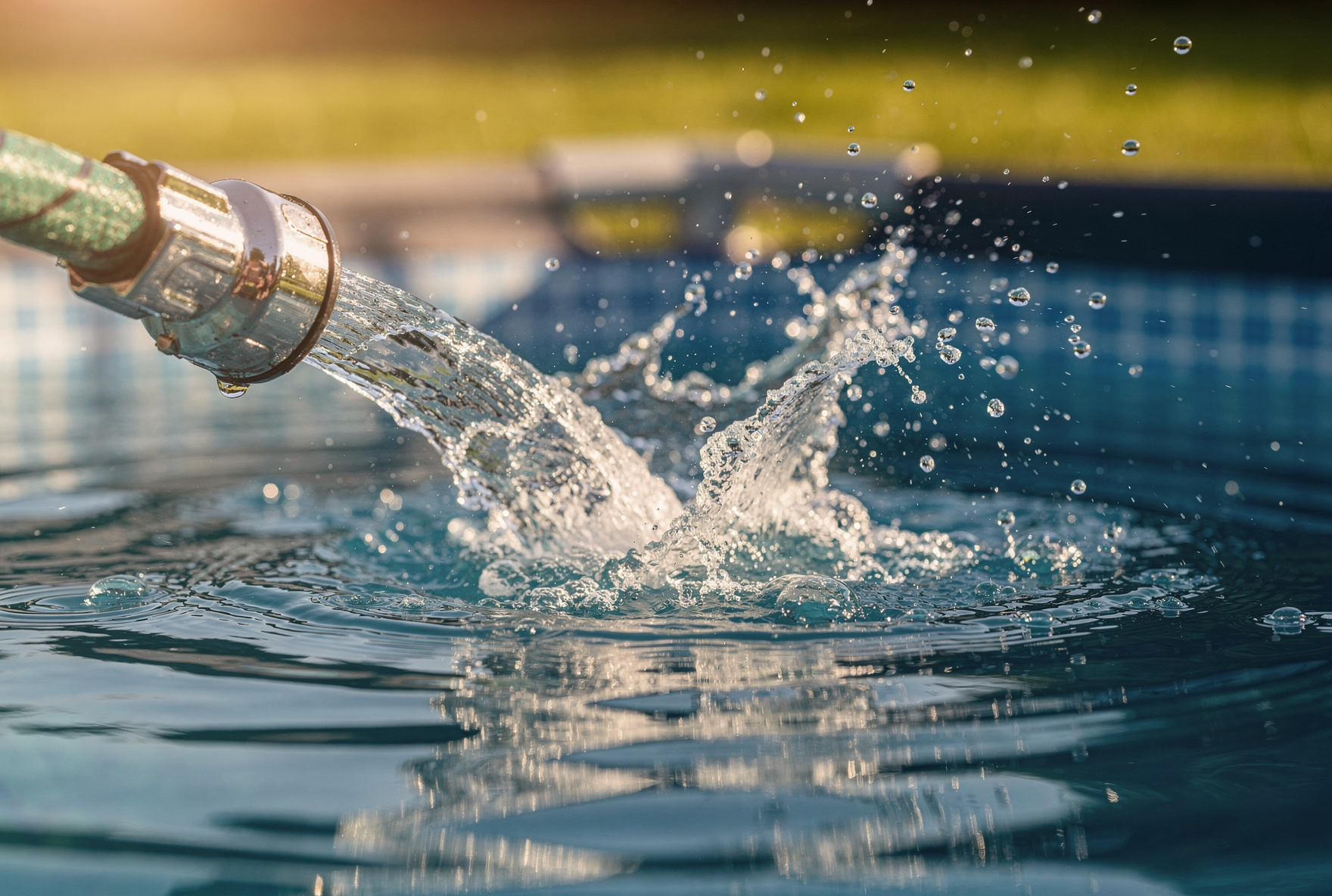
Filling a pool usually takes anywhere from 12 to 48 hours, depending on your pool's size and your hose's flow rate. Divide your pool's gallon volume by your hose's gallons per minute and you'll know your fill time in minutes.
With this simple formula, you're set to plan ahead and make sure your pool's ready for you and your guests. Let's break it down so you never have to second-guess your timing.
Why Timing Your Pool Fill Matters
Timing when to fill your pool allows you to have your pool ready when you need it. Plus, it means you can plan maintenance, refills, or repairs with less stress when you know exactly how long to set aside.
Filling during cheaper water rate hours, like late nights, can even save you some cash if your city charges by usage. Plus, you can easily coordinate with service pros when you have a clear timeline.
How to Figure Out Your Pool's Fill Time
The real answer to "how long does it take to fill a pool?" comes down to two things:
- Your pool's total volume, in gallons
- Your hose's flow rate, in gallons per minute (GPM)
Here's the formula to work with:
Pool Volume (gallons) ÷ Flow Rate (gallons per minute) = Fill Time (minutes)
Let's say your pool holds 15,000 gallons and your hose flows at 10 GPM. That means it'll take about 1,500 minutes, or 25 hours, to fill up.
Most residential pools will take between 12 and 48 hours to fill with a single garden hose. Smaller pools fill up faster, while large in ground pools need more patience.
Step 1: Find Your Pool's Volume
If you're not sure of your pool's exact volume, an estimate will give you a ballpark number for your fill time.
- Rectangular pool: Length × Width × Average Depth, then multiply by 7.5 to get gallons.
Example: 16 ft × 32 ft × 4.5 ft × 7.5 = 17,280 gallons. - Round pool: Diameter × Diameter × Average Depth × 5.9.
Example: 20 ft × 20 ft × 4 ft × 5.9 = 9,440 gallons. - Irregular pool: Longest length × Widest width × Average Depth × 5.9.
If you already know your volume, skip right to the next step.
Step 2: Check Your Flow Rate
Garden hoses put out 9 to 17 GPM. If you're not sure, you can guess that the average hose is around 10 to 12 GPM.
- Take a 5-gallon bucket and a timer.
- Crank the hose all the way up and time how long it takes to fill the bucket.
- If it fills in 30 seconds, you're at 10 GPM (5 gallons ÷ 0.5 minutes).
Watch your water pressure. If you feel a strong gush, your flow rate's probably on the high end. If it's more of a trickle, you may be at the low end.
Step 3: Do the Simple Math
Plug your numbers in. Pool volume divided by flow rate gives you total fill minutes. Split by 60 for hours.
- Example: 15,000 gallons ÷ 10 GPM = 1,500 minutes = 25 hours.
Bigger pools add up fast. For example, a 20,000-gallon pool with a 9 GPM hose needs about 37 hours. A 30,000-gallon monster can take over 56 hours if your flow rate's slow.
It's also not a bad idea to budget a few hours of extra time in your estimate, especially if you need your pool full by a certain time.
What Can Change Your Fill Time?
A couple of things can push your schedule off track:
- Water pressure drops at peak hours when everyone's showering or watering lawns. Fill overnight or early morning for the most reliable pressure.
- Multiple hoses can double (or more) your flow rate. Grab another hose and faucet if you've got them, but check your water supply can handle it.
- Local restrictions can limit how and when you fill your pool, especially during droughts. Always check before you start.
- Weather like dry, windy days might cause a little more evaporation. It usually doesn't add more than a few gallons.
How to Fill Your Pool Faster and Easier
A little planning can go a long way! Here are some hot tips to keep in mind when filling your pool:
- Double your power: Connect a second hose to another outdoor faucet. If you don't have a second spigot, you can try a hose splitter. Just make sure your home's water pressure handles the flow without dropping too low.
- Watch the clock: Start the water after dinner or right before sunrise. Your neighbors aren't showering or running dishwashers then. You'll get best-in-class water pressure from the city lines when the rest of the block sleeps.
- Save some cash: Many utility companies actually offer lower rates during off-peak hours like late nights. Filling your pool overnight might lower your final bill compared to running the hose during the busy afternoon usage window.
- Plan the schedule: Start a major refill at least two or three days before you plan to swim. It takes a long time to fill a large pool. Plus, you need extra time to balance the chemistry perfectly.
- Protect your well: If you rely on well water, you absolutely must take it slow. Running a hose continuously can drain the well or burn out the pump. That is a huge, expensive headache you don't want.
Top Mistakes You Don’t Have to Make
Getting your pool ready for the season requires smart planning so you can actually enjoy the water. You simply need to check your local restrictions, build a buffer into your timeline, and master the chemical balance before anyone swims.
Here is the lowdown on getting everything perfect:
- Don't ignore local water rules: Some towns enforce strict limits on outdoor water use during the heat of summer. You might face restrictions on which days or times you can use the hose depending on your area's drought status. Check your municipal website regarding flow rates and usage caps before you start filling. You definitely want to avoid getting slapped with a hefty fine from the city.
- Give your pool time to warm up: Filling a pool takes way longer than you think, and once it's full, the water still needs to warm up. Giving yourself a buffer creates time for the sun or pool heater to warm the water. Nobody wants to jump into an ice bath because you finished filling it an hour before the party started.
- Don't forget the water chemistry: Fresh water does not equal safe water. You still need to test and adjust the total alkalinity, pH, and calcium hardness before letting anyone take a dip. Run the filtration system for at least 24 hours to circulate those chemicals properly. If you just finished repairs, factor in extra time to clean the filter and balance the water perfectly.
Have Your Pool Ready When You Need It
Now you know exactly how long it takes to fill your pool. Grab the numbers, do the math, and plan to finish filling with time to spare. No sweat, no stress.
And now that your pool's full, it's ready for guests! If you're looking to offset the cost of filling your pool, become a host with Swimply. You make the rules and the money, all from your backyard pool.